
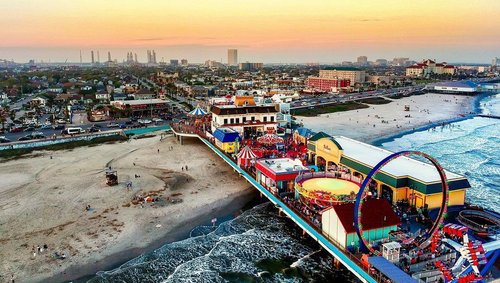
(image courtesy of http://www.galveston.com)
I realize that not everyone gets the chance to travel to New York City or Disney World or Ireland. There was a time when just the thought of visiting these places seemed completely out of the realm of possibilities for me, so I fully understand. I count myself very fortunate to have had these rare opportunities and never imagined I would make it that far. To a small town girl like me, growing up in South Texas meant the world was very, very small, but at the same time, just large enough. My family didn’t take elaborate vacations like some are blessed enough to do each year. When I was 11 years old, my father rented a 15-passenger van and took my mom, grandmother, brothers and sister-in-law, and kid nephew to the Grand Canyon. It was our first and last family vacation outside of Texas. Before that, the furthest I’d been was the Riverwalk in San Antonio.
However, never once felt as if I were missing out on experiences. We might not have traveled much or very far, but then again we didn’t have to travel far for it feel like a “get away.” I suppose that’s one of the benefits of living on the Gulf Coast – if we wanted an “island get away,” then all we had to do was load up and drive the 25 minutes to the beach. During the week days of summer, when Dad was at work and my cousins and I were crowding Mom’s kitchen with nothing to do, she would sometimes load us all up and take the hour-long trek to either Matagorda or Galveston Islands. For such a small world, our options weren’t half bad when I really think about it. It would take years before I came to fully appreciate Mom’s efforts in making our summers worthwhile. Later I would understand that money was tight and Dad held a vice-like grip to what we did have, while Mom worried over our missing out on experiences. Thanks to her though, we didn’t miss much. The beaches of Surfside and Quintana had just as much sand and water as Florida or California, after all, and we didn’t need to hop on a plane to enjoy them.
If we wanted to feel like tourists for the day, Galveston was and is our go-to destination. Galveston is the ideal spot for that island vacation feel, complete with plenty of cheesy souvenir shops and overpriced restaurants to make you really believe you’re on vacation while not being too far from your own bed back in Brazoria County. Mom is somewhat of a Galveston history enthusiast and has spent countless hours pouring over maps and autobiographical books written of the island’s fascinating past. I’m not much into history myself, but still some of my fondest memories are from day trips with her where we’d just drive around the island as she pointed out various significant locations and historical markers. From those trips, I developed my own appreciation for Galveston and came to see it as more than just a travel destination. It taught me also that one doesn’t have to get caught in a “tourist trap” in order to enjoy all that the island has to offer.
In fact, some of the best things about Galveston are completely free to visitors. Though you should still contribute to its local economy by stopping in at one of the many local shops or restaurants – you won’t regret it. The beach, of course, is its greatest selling point, although it was never really the reason for our trips. Not to say it isn’t worth visiting – it is certainly one of the better kept beaches on the Gulf and, with no vehicle traffic, visitors don’t need to worry about kids running around. But now that parking fees have extended to the Seawall, it no longer fits into the “completely free” category. This change doesn’t lessen the lines of vehicles taking up each available spot along the highway though or keep crowds from filling up the entire section of beach.
Side Tip: If you’re looking for an equally maintained beach without the cost of parking, less than a half hour east of Galveston in Brazoria County is fifteen miles of free beach access on Follett’s Island


Galveston’s Seawall is a feat of engineering and worth seeing for yourself even if you have no interest in a beach day. Between the island’s Seawall and bay side, the narrow stretch of land that comprises Galveston’s acreage has plenty more sights to behold. You can pick up a brochure from any visitor center around town for location maps and helpful tips on a driving tour around the island. A haunted history guide is one of the more interesting selections and will lead you to notable locations related to the infamous 1900 storm.
Considered the country’s worst natural disaster to date, the unnamed hurricane at the turn of the century crippled Galveston’s thriving economy almost to ruin with a death count reaching close to 10,000. The devastation left in the storm’s wake was monumental and difficult to imagine even today. Overwhelmed by the amount of bodies found all across the island in the days after, victims of the storm and unearthed graves from flooded cemeteries alike, survivors began piling the remains in empty stores and warehouse still left standing. An attempt to bury them at sea only resulted in the bodies washing up on shore a few days later. It is said that the smell of death filled the air for months.
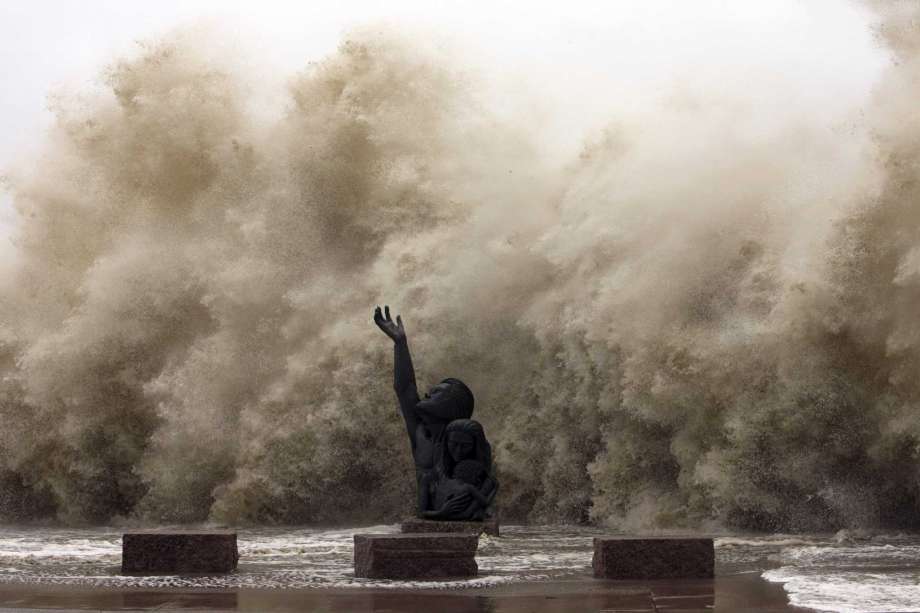
The buildings that miraculously survived the 1900 storm are designated with plaques outside their doors. Various memorials have been erected around the island, including a state on the Seawall. The 9’ monument is meant to represent man’s enduring strength in the face of overwhelming odds, but as pictured in the image below, it serves as a reminder that we are still at the mercy of nature’s forces no matter what heights we believe to have reached.
108 years after the Great Storm, as it’s often referred to as, Galveston was again reminded of nature’s superiority when Hurricane Ike barreled its way over the island. Ike wasn’t the first storm of notable strength to hit the coastline since 1900, but Galveston had gone decades with limited effects from storm surges thanks to the implementation of a seawall in 1920?, raising the elevation of the entire island by 17 feet at the same time. Despite that incredible feat, there was nothing that could’ve prevented the catastrophic destruction on September 13, 2008. Water levels on the bay side of the island rose at unbelievable speeds, spilling across the residential inland areas until meeting the surge pouring in from the Gulf. Before long, Galveston was completely submerged. If that wasn’t enough, electrical fires sparked in neighborhoods on all sides, while the entire community of homes on Bolivar Pennisula was wiped off the map.
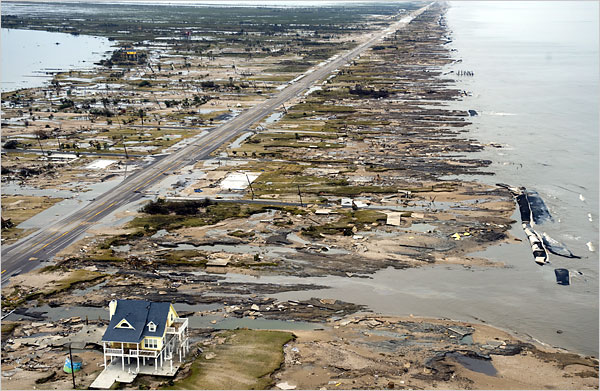
Much like 1900, there was scarcely an inch of Galveston left unaffected in the wake of the storm, but also like its predecessor, Ike wouldn’t have the last word. Spend any amount of time in Galveston and you’ll recognize a collective resilience in the attitudes of its locals, especially if asked about their personal experiences during and after Hurricane Ike. “Worse than some, better than others,” seems to be the common sentiment among residents. More than a few business owners whose stores were housed along The Strand, Galveston’s historical main street, proudly pointed to marked water lines in their interior walls like a badge of honor instead of a painful memory. In fact, most of the businesses in this area have their high water levels denoted with bright paint inside and out, serving as a symbol of victory over Mother Nature’s cruelty.


The collective strength of fortitude in Galveston’s communities can almost be described as that of an obdurate teenager, refusing to be steered in another direction regardless of how persuasive or persistent the opposition is. It’s an attitude personified by the residents, past and current, and one that’s a reflection of the island itself in its refusal to succumb to defeat. Just as before, Galveston proved it would not stay down nor would it ever, no matter how hard it’s kicked or how often. And unlike other cities devastated by natural disasters, Galveston doesn’t merely sweep away damaged remnants, but instead works to salvage that which they can, and restore what hasn’t been lost. All across the island are remarkable examples of something wonderful made from that which storms sought to ruin. Dozens of dead trees can be found in yards throughout the island, killed by the flood waters but left rooted in the ground. High winds and rushing water warped and twisted their forms into something most would have seen as mutilated and ugly. One local artist saw the potential beauty in their mangled shapes however, and set out to restore purpose in the lifeless stumps. These dead trees, once eyesores to those reeling from loss, today serve as incredible works of art decorating the space they rest in, sculpted and grafted into monuments that represent the very opposite of their cause – celebrations of life and nature, of creation instead of destruction. Every time I come across one such tree, I am moved by the thoughtfulness of the artist and wonder if he intended the various interpretation of their meaning. To me, they still serve as reminders of the devastation, but in a way that honors that which was lost but not forgotten. The artist gave them the gift of purpose, made them beautiful memorials of a life well-lived and a tangible lesson of the island’s resilience.


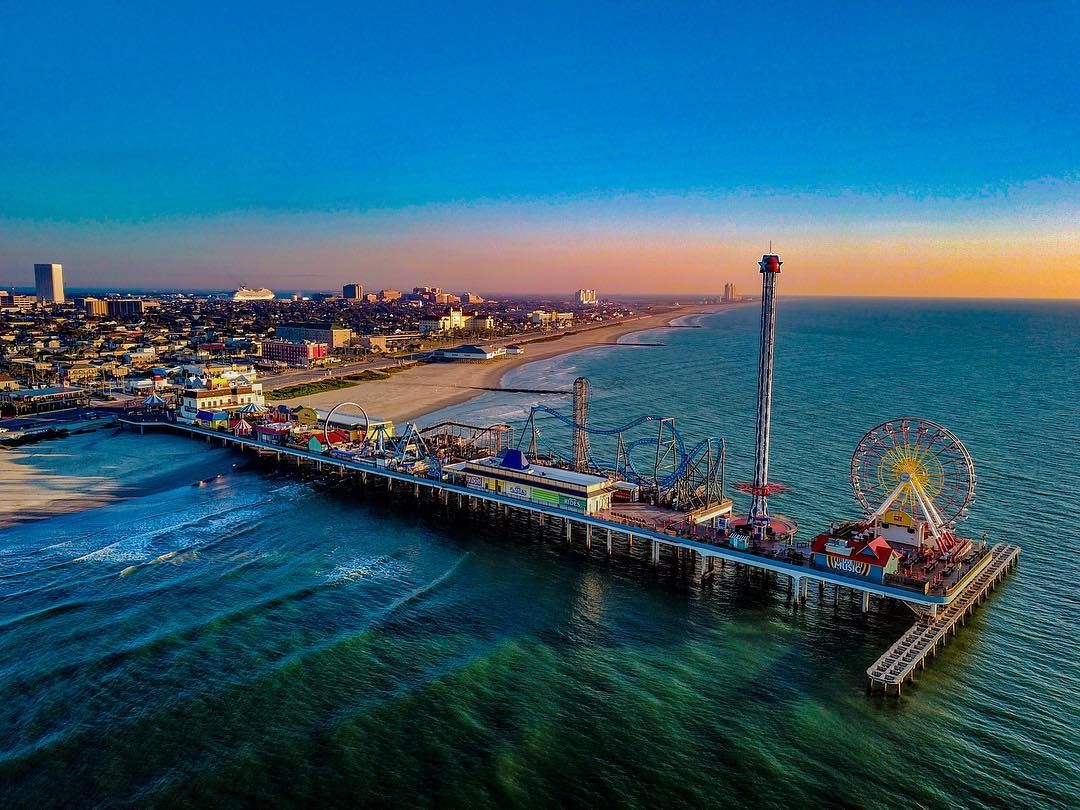
Another example of the re-purposing of damaged goods is probably the most elaborate restoration project the island saw after Hurricane Ike, since becoming a high profile staple of Galveston destination marketing. Extending nearly half a mile into the waves of the Gulf of Mexico, Galveston Island Pleasure Pier is the largest and arguably most recognizable tourist attraction in South Texas. Aiming to recapture the magic of old-fashioned amusement parks, local businessman Tilman Fertitta announced his plan to construct the park in almost the exact same manner as the pleasure pier that existed in Galveston decades prior. The news came well after Ike ravaged Galveston’s shores, but months before the announcement and longer still thereafter, what was left of the Flagship Hotel stood in haunting ruins beyond the Seawall. In the peak of its popularity, the hotel’s towering heights and unique position over the tireless waves provided guests with a feeling of a night spent at sea without the accompanying motion sickness. There had never been anything like it before and the hotel coasted on the success of its unlikely construction until most of the intrigue and notoriety wore off. Well before Ike, the Flagship was said to be suffering from a lack of modern updates and questionable maintenance. In its final months of operation even as popularity dwindled, the hotel still stood as a beach destination staple and an image (both literal and figurative) of the codependency between the island and the Gulf.
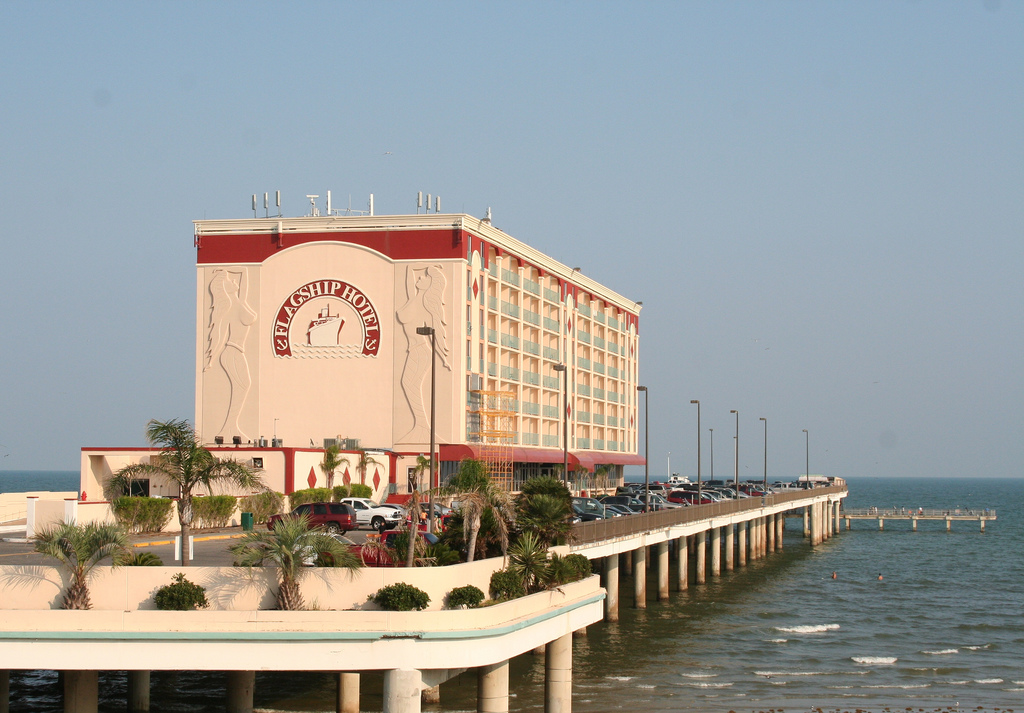
Resting on giant pillars buried beneath the waves, the hotel’s foundation above the unpredictable waters proved to be its death knell. After Ike tore across Galveston’s shores, the structure left at the Seawall’s edge was but a shell of the once heralded resort hotel. Sections of the exterior wall were ripped away, leaving gaping holes in full view in the front and sides of the building. For over a year after the storm, curtains in a guest room could still be seen from the street, shifting with the Gulf winds near one of the mermaids that once graced the full height of the exterior wall, where they greeted visitors as they crossed from the street into the resort. The single ramp connecting the hotel to the island was washed away by the storm, preventing ease of access to the structure for many months. To any passerby, the haunting remains of the hotel appeared to have been forgotten by the city, cut off from the rest of the island as restoration efforts were underway everywhere else. But to entrepreneur and Galveston local Fertitta, the firm standing foundation of the piers beneath the crumbling hotel appeared only as an opportunity for something greater.


The idea to transform the hotel ruins into a theme park destination was a good one, but turning that idea into an executable plan seemed more unrealistic the longer it stood in neglect. Any lingering doubt was squashed when the demolition finally began. Today, Galveston Island Pleasure Pier is visited by hundreds of thousands each year. The empty and silent ghost hotel, where once the only movement was seen in the ragged drapes through a missing wall, now replaced by sounds of carnival games and echoing laughter.


The Pleasure Pier, like most of Galveston’s attractions and historical influences, is an old-fashioned idea. Only a few carnival-like boardwalks are still in operation today, and although it remains a popular destination to date, its notoriety and unique offerings may still wear off. Like the Flagship Hotel before it, Pleasure Pier could eventually become an outdated past time better suited for previous generations. And also like the Flagship, its position atop the fickle waves might prove disastrous. Fertitta, like every Galveston resident, must be aware of the impermanent nature of anything built on the island. The entire local population cannot be ignorant of the fact that another Ike could come at any time. Yet it’s this type of bull-headed obstinacy that has fueled Galveston’s economy from the very beginning. The water lines on the walls of every business seem to declare, “look what you tried to do, and look what we still have.” Fertitta’s Pleasure Pier is his own sort of egotistical declaration. Galveston will continue to test the limits of their survival no matter what life throws at it.
With that said, it’s hard to not find the spirit of Galveston inspiring. I highly recommend a visit to anyone who’s able to grace their shores, and when you do, take a minute or two to talk to one of the residents. Hear their story. Recognize the island strength that courses through the ground and in the blood of the people that love it enough to risk everything. The people that love it enough to stay.
 True Texans Travel Big